
Plan your route.
Don’t stand in place at your protest. Before Loyola revised their demonstration policy, protests were restricted to the North Lawn next to Damen Student Center. Take advantage of the policy change and walk your protest throughout campus.
Ryan Sorrell, a Mizzou protester faced with suspension last year, formed his protest route to make a point to the University. His counterpart, Jason Pica, presented a list of grievances from the Black community to the Dean of Students.
Ryan led the entire protest, consisting of 900+ students, past the administration windows as Pica spoke. His protest route showed the administration that a large number of students supported the changes their group was attempting to implement.
Protest inside at Damen Student Center and Terry Student Center.
These are the only two buildings protests are allowed to be held inside. The use of amplified sound is NOT allowed indoors. These Student Center get a lot of traffic throughout the day. Protesting inside these student centers could allow more students and faculty members to be exposed to your message.
Be aware of how you protest.
Loyola faculty stresses that protesters be aware of:
-
Time
-
Place
-
And Manner
“Loyola wants to be sure you are being respectful of other students,” said Kimberly Moore, Assistant Dean of Students & Director of Off-Campus Student Life.
Protesters are not allowed to disrupt students not participating in a protest. For example, if a protest is taking place on the West Quad, students aren’t permitting to pressure others to join or force flyers onto unwilling students.
“Loyola’s main concern is they don’t want to disrupt the main flow of campus life,” said Moore.
Don’t seek faculty approval.
Loyola’s Community Standards handbook states that “students or recognized student organizations intending to organize a demonstration are encouraged to notify the Office of the Dean of Students two days before the demonstration”.
However, notifying the University prior to demonstration is NOT required. Staging a protest without prior administration approval could make a bigger impact.
Read the student handbook!
According to Moore, Loyola faculty edited the length of the student demonstration policy from four pages to just over one. There were a lot of changes. These are four important new rules:
-
Student can now use amplified sound outside without the “ok” of faculty
-
Demonstrations can be throughout campus
-
Indoor demonstration is now allowed (exclusively in Damen Student Center and Terry Student Center)
-
Demonstration approval by faculty is no longer a necessity
Before the revision of the Community Standards, students needed to seek approval from the faculty prior to staging a demonstration.
“It made no sense,” said Sorrell, “If you’re demonstrating against the school, why would you be asking the school for permission to do so.”
Other helpful tips
-
SPEAK UP!
Loyola appoints staff members to review their Community Standards yearly, including their demonstration policy. This means that if you, a Loyola student, are unsatisfied with one of Loyola’s policies, you have to opportunity to potentially change it.
-
Don't be afraid if you break a rule
The first way the school will respond is with conversation. If you’re breaking Loyola’s demonstration policy, faculty will simply ask you to change.
“We act on a case-by-case basis, but our first step would be to have a faculty member ask you to adjust your demonstration to align with policy,” said Moore. “If a student is combative, our first step is conversation. We try not to involve Campus Safety if it’s not necessary.”
-
Make sacrifices
Sorrell advises students that sometimes it’s necessary to break the rules in order to make a change.
“If you really want to make a change, then you have to be willing to sacrifice anything, including accepting consequences,” said Sorrell. “Be radical and don’t listen to the moderate administration that wants to keep that status quo."
How to Protest at Loyola Without Getting Suspended
by Carolyn Droke
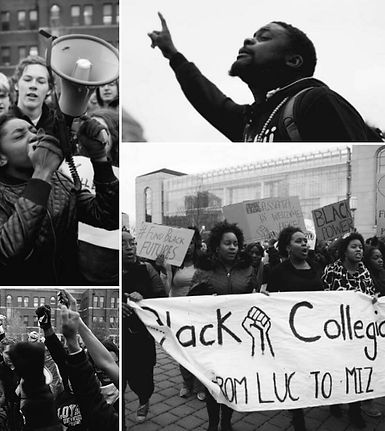
Loyola Administration punished four students who organized protests last year.
Three were suspended immediately following the Mizzou protest on Loyola’s Lake Shore Campus.
One student was asked by the University to step down from his position in student government after protesting the conditions of dining hall workers.
Loyola University’s response to the on-campus protests were met with sever backlash. Both students and members of the community spoke out against the University. They claimed Loyola’s actions against student protesters directly violated their Jesuit identity as “an institution committed to social justice.”
photo by Dante Viollete/ @publicartluc on Istagram
Loyola University responded to backlash by listening to students and revising their policy on student demonstration.
In wake of the University’s response to protests, students wonder, “How can I speak up about issues on campus without getting in trouble with the University?”
Here are five ways you can organize a successful protest on Loyola’s campus without breaking the University's community standards.